March rolls around and suddenly everyone’s HR department is flooded with the same question: where do I put my money to save tax? Tax saving under Section 80C is probably the most talked-about — and most misunderstood — part of Indian income tax planning.
Here’s the thing nobody tells you upfront: 80C has a ₹1.5 lakh limit, and it’s a combined limit across all instruments, not per instrument. People often assume they can claim ₹1.5 lakh on PPF and another ₹1.5 lakh on ELSS. That’s not how it works.
What Exactly Falls Under Section 80C
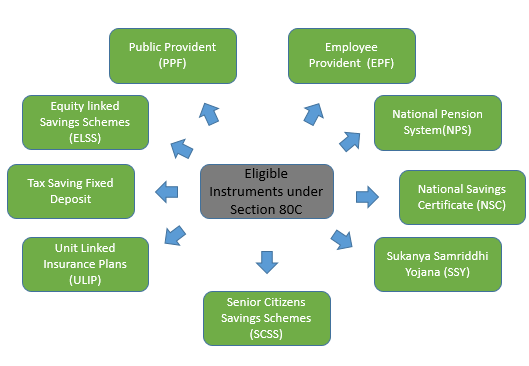
Direct answer: Section 80C allows deductions up to ₹1.5 lakh per financial year on investments like PPF, ELSS, EPF, life insurance premiums, NSC, tax-saving FDs, and home loan principal repayment — combined, not individually.
A few things surprise people the first time they read the full list:
- Tuition fees for up to two children also qualify
- Principal repayment on a home loan counts (not just the interest, which falls under Section 24)
- Sukanya Samriddhi Yojana contributions qualify too, if you have a daughter under ten
ELSS Funds — The Option Most Young Earners Prefer
Equity Linked Savings Schemes have a lock-in of just three years, the shortest among all 80C options. I personally lean toward ELSS over PPF for anyone under 35, purely because the potential returns are higher, even with market risk factored in.
That said, ELSS returns aren’t guaranteed. If you’re someone who panics during market dips, PPF’s steady, government-backed return might actually suit your temperament better. There’s no universally “right” answer here.
PPF — Slow, Steady, and Still Relevant
Public Provident Fund offers a government-guaranteed interest rate, currently revised quarterly, and the entire maturity amount is tax-free. The 15-year lock-in scares people off, but partial withdrawals are allowed from the 7th year.
Picture a 28-year-old software engineer in Pune who starts a PPF account with ₹12,500 a month. By the time she’s 43, that steady discipline compounds into a genuinely large, tax-free corpus — without her ever touching the stock market.
Life Insurance Premiums Count Too — But Don’t Overdo It
Term insurance and traditional policies both qualify under 80C. The mistake many people make is buying a traditional endowment plan just for the tax break, when the actual insurance coverage is thin and the returns are mediocre, often 4-5% annually.
If you already have adequate term cover, don’t buy another policy purely to fill your 80C bucket. Use ELSS or PPF for the remaining amount instead.
Home Loan Principal Repayment
Direct answer: The principal portion of your EMI qualifies under 80C, separate from the interest deduction under Section 24(b), which has its own ₹2 lakh limit for self-occupied property.
This is one of the most underused deductions simply because people don’t check their amortisation schedule to see how much of their EMI is actually principal versus interest.
Common Mistakes People Make With 80C Planning
- Waiting until March to invest in a lump sum, missing out on rupee-cost averaging benefits for ELSS
- Not tracking that EPF contributions from salary already eat into the ₹1.5 lakh limit
- Buying insurance products they don’t need, purely for the deduction
[link to related guide on new tax regime vs old regime here]
Frequently Asked Questions
Is the new tax regime eligible for Section 80C deductions? No, the new tax regime doesn’t allow most 80C deductions. You need to stick with the old regime to claim them.
Can I claim 80C for my spouse’s investments? Only if the investment is in your own name; investments purely in a spouse’s name are claimed by them, not you.
What happens if I invest more than ₹1.5 lakh in 80C instruments? The excess amount simply doesn’t get any additional tax benefit — it’s capped at ₹1.5 lakh regardless of how much you invest.
Is EPF automatically counted under 80C? Yes, your mandatory EPF contribution through salary counts toward the ₹1.5 lakh limit automatically.
Which is better for tax saving, ELSS or PPF? It depends on your risk appetite — ELSS suits those comfortable with market swings, while PPF suits people who prefer guaranteed, government-backed returns.
Conclusion
Section 80C isn’t complicated once you see it as one bucket with multiple taps feeding into it. Figure out your EPF and home loan principal first, since those are often automatic, then fill the remaining gap with ELSS or PPF based on your comfort with risk. Don’t wait until the last week of March — spread your investments across the year and let compounding do some of the work for you.
Suggested alt text: “Pie chart breaking down Section 80C investment options up to ₹1.5 lakh